Keep Calm and Drink Your Tea!

From the Brand Historian’s Timeline: 1706

In May, 2020 after the pandemic had forced the closure of the economy, the Bank of England proclaimed that Great Britain was about to experience the worst recession since 1706.

This was the year when despite Marlborough’s plucky away victory against the French at Ramillies, the costs of waging a war in Europe were spiralling completely out of control and bankrupting the nation.

Step forward Thomas Twining, late of Painswick, Gloucs., who having learned a few trading tricks from his chums at the East India Company purchased Tom’s Coffee Shop in the Strand, and with more than a hint of timely repurposing, encouraged the Brits for the first time to keep calm and drink their tea, specifically of course Twinings. In so doing, he laid the foundations of a Great British habit and brand. #branding #brand #marketing #history

There’s more brand histories at strategic-leaps.com

From The Brand Historian’s Timeline: 1962

1962 was the year that had it all: Missiles and Marilyn; Bond and the Beatles, Warhol and Steptoe. It also saw the introduction of two giants of consumer culture. Things hadn’t started very well for Lou Groen’s McDonald’s franchise in Ohio. Especially on Fridays, when the predominantly Catholic clientele in the area were prohibited from eating meat. Lou’s eureka date with history came with the idea of combining fried fish with tartare sauce in the familiar McDonalds bun. The Filet-O-Fish was born and it hit Ray Kroc’s – the Hula Pineapple and Cheese Burger – right out of the park. Meanwhile back in York in England, Rowntree continued a golden run of innovation with After Eight Mint Chocolate Thins which brilliantly packaged dark chocolate, fondant crème and genteel aspiration in a delightfully tasteful if over fussy little carton. #branding #brand #marketing #history

1937: A Year of Dwarves, Spice and Spam

From The Brand Historian’s Timeline

Dwarves were big box office in 1937. Snow White, premiering in Disney’s first full-length feature was befriended by seven, meanwhile on the other side of the Atlantic, Gandalf departed the Shire for the Misty Mountains with a troop of 13, plus of course Bilbo the bonus burglar aka The Hobbit. The dwarves’ natural enemy was the Goblin, which by a strange coincidence was the name of a bedside tea-making appliance also launched this year and known to people of a certain demographic as the Goblin Teasmade. It was in many respects the Nespresso of its day. 

The other two iconic brands launched in 1937 did not make it into Tolkien, as far as I know, but a close re-read may be necessary….The first of these is Old Spice – but hold that Carmina Burana tsunami of refreshment and steady the Wieden and Kennedy dude you could smell like, because the first Old Spice range actually consisted of toiletries aimed at women based on founder William Lightfoot Schultz’s mother’s native American pot pourri recipe. We chaps had to wait a little while before that more macho aftershave braced our decorticated faces. The other great launch of 1937 was Spam, Hormel Foods’ wonderful solution to the American pork shoulder mountain, which may or may not have been mixed with spiced ham to create a whole new protein category that remains very big in Hawaii to this day. Oh, and thanks to that 1970 Monty Python café sketch, the brand name was hijacked by early internet enthusiasts who needed a word to describe the increasing surges of pointless, irrelevant and unsolicited electronic messages. Thus did the brand make a triumphant return on Broadway in the brand extension Spamalot, which thinking about it, might just have featured a few dwarves? #branding #brand #marketing #history

From Arctic Lite to The Dinner Party Set

The Brand Historian goes in search of Key Drinkers

What are the three most important concepts of strategy?” was how the Chilean Arnaldo Hax liked to tease the senior managers who attended his workshops as Unilever’s house strategist. His answer, delivered with appropriate glinting charm, was “Segmentation, segmentation, segmentation.” This was a precept that certainly resonated with me because I have always enjoyed slicing markets and naming the parts, perhaps because great segmentations require the perfect fusion of creative yin and analytical yang

There was one segmentation project that I worked on in the late 80s that was particularly memorable, and from a business point of view, quite successful. It was a study of UK drinking habits and it sought to validate the pareto principle (also known as the 80/20 rule) by exploring the importance of Key Drinkers to various alcoholic drink categories. 

A few years earlier, I had met Derek Penney, the doyen of booze research. It was Derek who was able to identify where the brewers went wrong with their attempt in the 1980s to bring the concept of light (low calorie) beers to the UK. On a simple ‘sip test’ there was nothing particularly bad – or good – about lager brands like Hemeling and Arctic light. But his more realistic ‘session testing’ methodology showed that on the production lines at British Leyland and Ford, where, after long shifts, lager drinkers would drink 6 to 8 pints a night, 5 nights a week, drinkers experienced an uncomfortable physical response which Derek believed was to do with the reduced calorific content of their beer consumption over time. Significant rejection by these core drinkers explained why light beers failed dismally after making a promising debut. 

It was also Derek who first showed me the importance of what he called Key Drinkers: the comparatively small number of consumers responsible for very significant amounts of the alcohol consumed in the UK. A few years later accompanied by Ken Baker and the big data of the TGI, we walked in Derek’s footsteps and created a behavioural segmentation model of alcoholic drinks which we called Measure for Measure..

Amongst the groups we identified was The Dinner Party Set, young upscale and well-educated adults who accounted for 8% of the population but a whacking 49% of the gin market, 44% of the Scotch market and 28% of the wine market. Using the latest geo-demographic mapping techniques, we were able to explore the UK geography of the Dinner Party Set at post code level and we created a series of maps which were subsequently used by retailers to site their shops and who knows, perhaps even the odd bottle bin.

The big irony of course was that twenty-five years later, it was the children of the Dinner Party Setters who were in the vanguard of the renaissance of gin and the great ginoflation which followed their enthusiasm for botanical micro- connoisseurship.

Men and Moisturisers

The rise and rise of male grooming

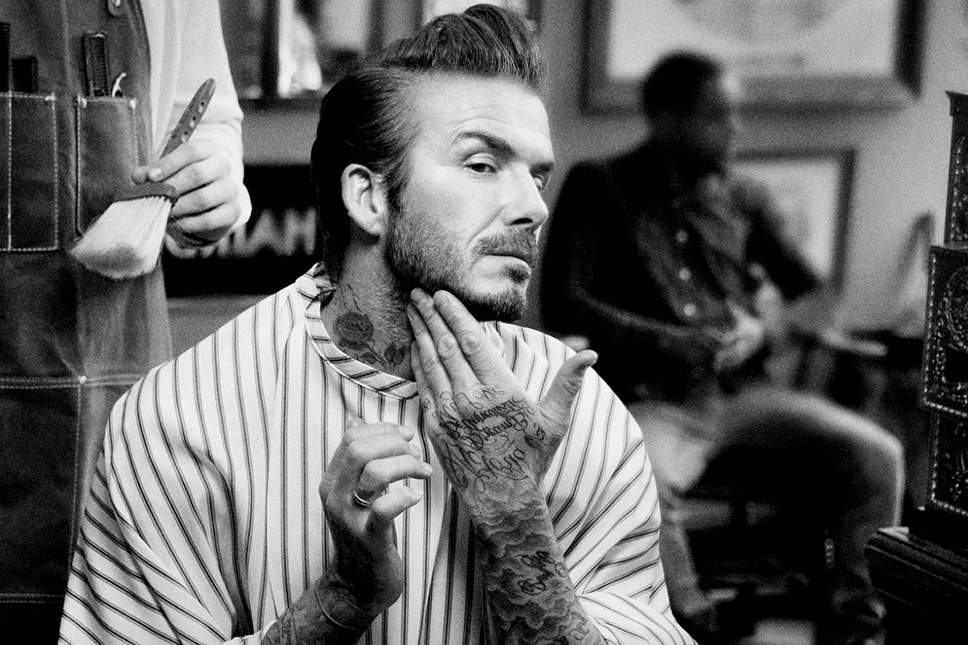
davidbeckhamhouse99.png

Beards are back, and with them a whole new industry of grooming preparations and paraphernalia. But it’s not just the beards that are getting cleaned and moisturised these days. Male grooming is blooming in all areas, and we are currently spending a whacking $60 billion a year with the hope of looking and feeling good. But if men’s behaviour in and out of the bathroom has changed enormously in the last hundred years, it hasn’t been without the need for strong encouragement. Branding has played a vital role and over the years, brands have used a variety of arguments to tempt, cajole and persuade us chaps to adopt new habits of toilette.

A close shave has always been a good place to start, and King Camp Gillette first offered up the best a man can get in 1904, when he launched his newly patented safety razor. Soon afterwards, a whole plethora of specialist preparations were available and becoming mainstream. One of the most popular was Old Spice which offered a fragranced shaving soap and after-shaving lotion that was packaged with a reassuringly nautical theme. There were many other brands which helped promote a smart turnout, all with solid establishment names like Jaguar, English Leather and British Sterling.

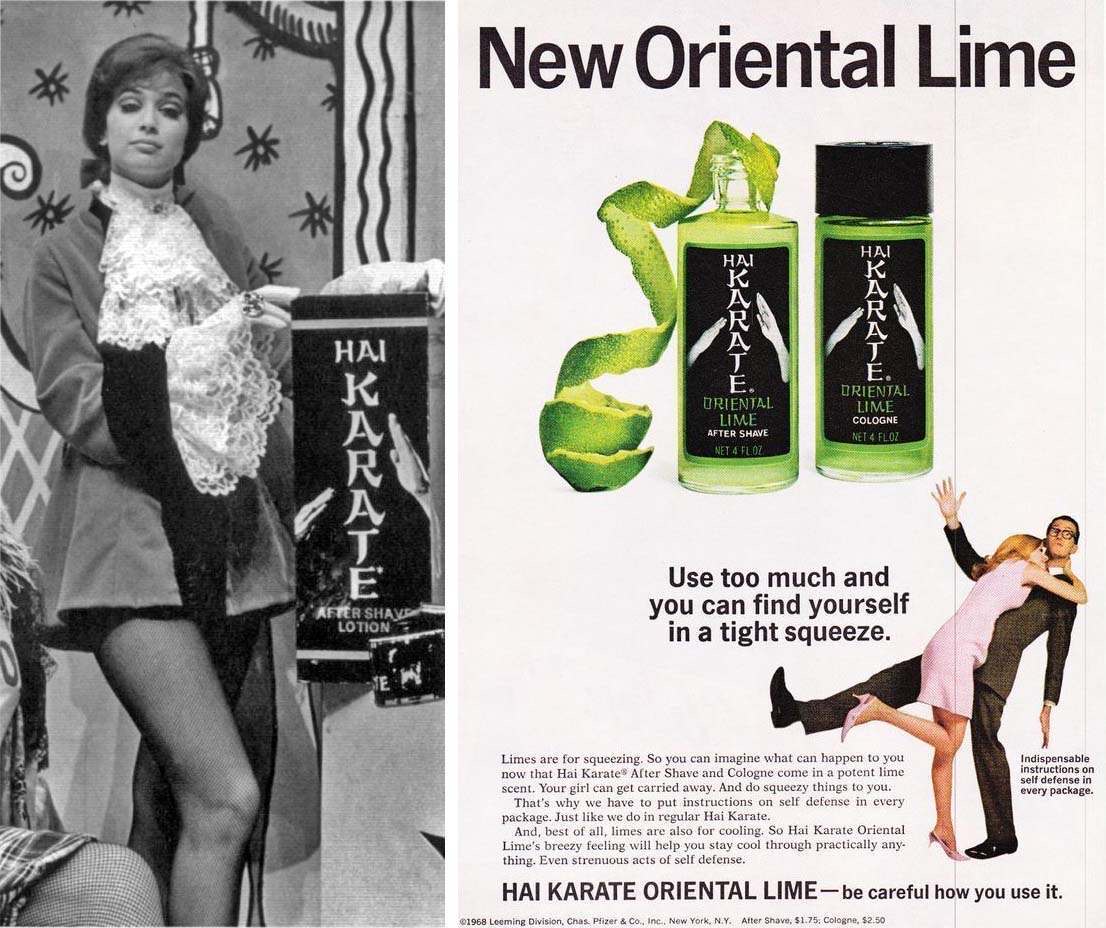
Get the girl was a rather more explicit approach employed by several brands. Brylcreem, which claimed it could make even the dullest head more debonair and “get the gals to pursue ya”, has had several moments in the sun, from its days selling its eponymous bounce to its re-invention in the 1980s as the official hair gel of the New Romantics. But the explicit selling of fragrance’s pulling power reached its climax in the 1960s with brands like Musk (the pack said Extra Strength Body Lotion) and Hai Karate, whose memorable demonstrations of product efficacy were fronted by Valerie Leon. “Be careful how you use it” the telly adverts warned.

097_Hai-Karate-Valerie-Leon

The Lynx Effect was another long-running campaign which used this story: but this time, the boy gets the girl thanks to the power of the shower in a can. In my experience, there are many mothers who prefer the smell of Lynx to the smell of teenage boy.

But men were not easily persuaded of the benefits of the fragrant life, which is why a whole grandstand of sporting heroes was recruited to show that smelling of perfume was a perfectly normal alpha-male behaviour. Henry Cooper famously encouraged us to “splash it all over.” In this exhortation to over-splash Fabergé Brut, he was assisted by a curious bunch of 70s sporting stars including Barry Sheene, David Emery and Harvey Smith. Play and spray proved to be an excellent marketing stratagem and is still very much in evidence today: “The essence of David Beckham” has been bottled and is now sold as Instinct.

David Beckham is of course the doyen of the metrosexuals, and these dedicated followers of fashion first appeared in numbers and in Esquire in the early 2000s. They needed little encouragement to try the ever-expanding range of male grooming products. Innovation played any important role too. Brands like Clinique and Nivea now stressed science- based skin-care benefits and found ways of translating their existing female product inventory into male acceptable versions.

1920px-Aqua_Velva_30s
Today we have come far from the simple soap and water regimes of yesteryear and there is a huge assortment of products now which in their labels mix the language of the pharmacy with the language of the DIY store. But this emphasis on functionality is not as new as you would think. 100 years ago, a brand called Aqua Velva was selling the benefits of scientific shaving to the hipsters and metrosexuals of the day.

We have always just needed an excuse.


Paul Christopher Walton
The Brand Historian:
Forays into the annals and archives of the brands we grew up with.
paul.walton@strategic-leaps.com

The Story of Cif or is that Jif?

Picture1Europe, household cleaning and the politics of brand harmonisation

One of the Brand Historian’s less glorious moments – at least as far as his mother is concerned – was the part he played in the rebranding of Jif to Cif.

One small letter perhaps, but a whole lot of trouble for me. Not to mention all that talk of the betrayal of Great British virtues like cleanliness in favour of something foreign and distinctly dodgy sounding.

To understand why feelings ran so high and tin hats were de rigour in the marketing department, we have to go back in time to when Jif first came twinkling into our kitchens and bathrooms.

Jif was the world’s first LAC. Marketing folk love a good acronym, and LAC stands for Liquid Abrasive Cleaner, and as such – cue fanfare – it is a minor technological miracle to boot. Until Jif arrived, the heavy artillery in the war against kitchen and the bathroom crud were scouring powders. These were cardboard tubes full of white-speckled chemicals with names like Ajax and Vim. On good old-fashioned building materials like enamel baths, they did the business without fuss, even if they were rather unpleasant to handle. But in the 1960s, as man-made materials became more popular in bathrooms and kitchens, old guard scouring powders could easily scratch and ruin that new avocado bathroom suite.

This is where Jif scored. Jif consisted of a thick cream in which were suspended small micro-particulates which cleaned surfaces effectively without scratching them. Some will remember the launch advert which featured a manic, twizzling ice skater whose blades cutting through ice demonstrated, at least metaphorically, the damage scourers could do to baths. Soon Jif garnered a gleaming reputation as the housewife’s favourite and essential partner in the war against grime. With the addition of a little elbow grease supplied by the user, Jif could be relied upon to work wonders on even the most unappetisingly carbonised hobs.

Interestingly, the product had been originally launched in 1969 in France where it was called Cif. But as the brand was rolled out across Europe and because think local was the prevailing strategy of the day, it resulted in an array of minor variations to the name which included Viss, Vim and of course, Jif. At least the familiar white and green packaging was more consistent, but not completely: In the Netherlands, the bottle was orange and red in honour of the Dutch Royal family.

Thirty years later, attitudes to cleaning had changed considerably and in what was becoming perhaps a less fastidious age, Jif Cream Cleaner was being made redundant by a range of modern and more convenient solutions like trigger packs and cleaning wipes. Jif’s owner, Unilever, decided the brand was having a mid-life crisis and needed to be shaken up a bit.

At that time, there was a fashion in marketing for brand harmonisation. This is where for reasons of cost saving, manufacturing simplicity or marketing efficiencies, similar products with differing identities across countries are converged towards one name and pack design. Famous name local favourites started to to be replaced by unfamiliar new brands. In the UK, Marathon lost out to Snickers, and Opal Fruits became Starburst.

So back now to what my mum calls my far-from-finest-hour. Because in focus groups consumers were saying that heavy duty cleaning was old hat, a whole new strategy was built based around more convenient products that seemed to better suited to the zeitgeist. And to make sure the consumer spotted this important news about the brand’s evolution, a key part of the marketing plan was to tell the consumer that Jif’s name was changing to Cif.

The consumer did indeed spot this news and she, in the guise of my mother, immediately sent me straight to the naughty step. “What’s all this, Kif?” she said. And she wasn’t the only one who let Unilever know what they thought of the new name. Little Englander anger was sharp and loud in Lever’s postbag.

But here’s the surprising thing: just six months later, despite all the sound and the fury, Cif was growing strongly again in the UK. For the first time in years.

Today my mum still loves her tough but gentle LAC chum in the war against crud. And, yes, she does still call it Jif – but perhaps there’s a big idea there?

Will Boris’ Big Bold Britain see another rebrand? ‘Let’s do Jif, ‘ did I hear someone say?

A bientôt!

Paul Christopher Walton

The Brand Historian:

Forays into the annals and archives of the brands we grew up with.


paul.walton@strategic-leaps.com


How the accountants drove us to vodka

We live in the age of Ginoflation when hotel, bar and supermarket shelves are stashed precariously with eccentric designer bottles whose labels proclaim some new angle on botanicals or an ingenious method of hand-crafted distillation. Seriously expensive tonic waters are now lining up as appropriately well-bred consorts. The resurgence of the market, after years in the doldrums, is in part the story of how hipsters have chosen gin to be one of modern life’s things in which to show expertise.


Gin like coffee and bottled ales are products stuffed full of interesting ingredients which make brand building based on what marketing folk call product intrinsics very simple. 50 years ago, vodka was the hot-shot spirit of the day, but its success had very little to do with product intrinsics.


In Moscow the 1860s, Pytor Smirnov built his reputation for distilling vodka by filtering it through charcoal. His grandson, Vladimir, massively expanded sales before getting mixed up in the Russian Revolution and having to make a fast exit for Paris via Istanbul. In 1939, the US importer Heublein bought the rights to what was now called Smirnoff, and as the first and only American vodka for many years, the brand can be given most of the credit for creating a new drinking habit.  Americans were encouraged to call it white whisky (‘No taste, no smell’) and the brand did well after the war as the go-to-spirit for a number of fashionable cocktails which showcased vodka’s perceived potency. These included Screwdriver (with orange) and Bullshot (with beef consommé) and the celebrated Moscow Mule which was created by an enterprising LA bar owner with a glut of ginger beer in his cellar.


In post-war Britain, sales also grew well but were beginning to plateau in the early 70s. The consumer knew the basic product facts about vodka – it was flavourless and colourless and filtered through tonnes of charcoal for purity, but this failed to cut any ice with the drinker. Vodka was seen as characterless as well as flavourless.


What really jump started the brand’s momentum was an engaging ad campaign by Young and Rubicam for their client IDV which emphasised the brand’s extrinsic qualities. Based around the theme ‘The effect is shattering’, which echoed the popular belief that Russian drinkers display their vigour by throwing their empty shot glasses to the floor, the campaign consisted of a series of vignettes which dramatized the-before-and-after conditions in which the product was drunk. The ads always worked best when they set up extravagant and unlikely contrasts. One of my favourite posters featured a louche dude with panama hat and cheroot confessing: ‘Accountancy was my life until I discovered Smirnoff.’ Another featured the obviously colourful and sybaritic life enjoyed by a public librarian who had also made the discovery.


Like all great ad campaigns, the slogan set-up soon entered the language and inspired many unpublishable derivatives. Sales of Smirnoff trebled and in the late 1970s, vodka became the trendsetter of the spirits market. But all good things come to end and pressure from the anti-alcohol lobby forced the client to adapt the campaign.


Sales of vodka remained healthy in the outer-directed, glitzy 80s, and a ‘large V.A.T’ was the signature drink enjoyed by Arthur Dailey in the Winchester club – which mine host, Dave, of course always had to put on the slate.


We still drink a lot of vodka, but in these inner-directed days, it is difficult, although not completely impossible, for it to play the product intrinsics game. Perhaps, we must wait for an end to Puritan austerity before we see the inevitable return of Cavalier high spirits and the extrovert world of vodka.


Paul Christopher Walton

The Brand Historian:

Forays into the annals and archives of the brands we grew up with.


paul.walton@strategic-leaps.com


The Story of Jif or is that Cif?

Picture1

Forays into the annals and archives of the brands we grew up with.

 One of the Brand Historian’s less glorious moments – at least as far as his mother is concerned – was the part he played in the rebranding of Jif to Cif.

One small letter perhaps, but a whole lot of trouble for me. Not to mention all that talk of the betrayal of Great British virtues like cleanliness in favour of something foreign and distinctly dodgy sounding.

To understand why feelings ran so high and tin hats were de rigour in the marketing department, we have to go back in time to when Jif first came twinkling into our kitchens and bathrooms.

Jif was the world’s first LAC. Marketing men love a good acronym, and LAC stands for Liquid Abrasive Cleaner, and as such – cue fanfare – it is a minor technological miracle to boot. Until Jif arrived, the heavy artillery in the war against kitchen and the bathroom crud were scouring powders. These were cardboard tubes full of white-speckled chemicals with names like Ajax and Vim. On good old-fashioned building materials like enamel baths, they did the business without fuss, even if they were rather unpleasant to handle. But in the 1960s, as man-made materials became more popular in bathrooms and kitchens, old guard scouring powders could easily scratch and ruin that new avocado bathroom suite.

This is where Jif scored. Jif consisted of a thick cream in which were suspended small micro-particulates which cleaned surfaces effectively without scratching them. Some will remember the launch advert which featured a manic, twizzling ice skater whose blades cutting through ice demonstrated, at least metaphorically, the damage scourers could do to baths. Soon Jif garnered a gleaming reputation as the housewife’s favourite and essential partner in the war against grime. With the addition of a little elbow grease supplied by the user, Jif could be relied upon to work wonders on even the most unappetisingly carbonised hobs.

Interestingly, the product had been originally launched in 1969 in France where it was called Cif. But as the brand was rolled out across Europe and because think local was the prevailing strategy of the day, it resulted in an array of minor variations to the name which included Viss, Vim and of course, Jif. At least the familiar white and green packaging was more consistent, but not completely: In the Netherlands, the bottle was orange and red in honour of the Dutch Royal family.

Thirty years later, attitudes to cleaning had changed considerably and in what was becoming perhaps a less fastidious age, Jif Cream Cleaner was being made redundant by a range of modern and more convenient solutions like trigger packs and cleaning wipes. Jif’s owner, Unilever, decided the brand was having a mid-life crisis and needed to be shaken up a bit.

At that time, there was a fashion in marketing for ‘brand harmonisation’. This is where for reasons of cost saving, manufacturing simplicity or marketing efficiencies, similar products with differing identities across countries are converged towards one name and pack design. Famous name local favourites started to to be replaced by unfamiliar new brands. In the UK, Marathon lost out to Snickers, and Opal Fruits became Starburst.

So back now to what my mum calls my far-from-finest-hour. Because in focus groups consumers were saying that heavy duty cleaning was old hat, a whole new strategy was built based around more convenient products that seemed to better suited to the zeitgeist. And to make sure the consumer spotted this important news about the brand’s evolution, a key part of the marketing plan was to tell the consumer that Jif’s name was changing to Cif.

The consumer did indeed spot this news and she, in the guise of my mother, immediately sent me straight to the naughty step. “What’s all this, Kif?” she said. And she wasn’t the only one who let Unilever know what they thought of the new name. Little Englander anger was loud in Lever’s postbag.

But here’s the surprising thing: just six months later, despite all the sound and the fury, Cif was growing strongly again in the UK. For the first time in years.

Today my mum still loves her tough but gentle LAC chum in the war against crud. And, yes, she does still call it Jif – but perhaps there’s a big idea there? Post- Brexit, might we expect another rebrand coming very soon?


There’s more at:

http://www.strategic-leaps.com


How the accountants drove us all to vodka

The Brand Historian

We live in the age of Ginoflation when hotel, bar and supermarket shelves are stashed precariously with eccentric designer bottles whose labels proclaim some new angle on botanicals or an ingenious method of hand-crafted distillation. Seriously expensive tonic waters are now lining up as appropriately well-bred consorts. The resurgence of the market, after years in the doldrums, is in part the story of how hipsters have chosen gin to be one of modern life’s things in which to show expertise.

Gin like coffee and bottled ales are products stuffed full of interesting ingredients which make brand building based on what marketing folk call product intrinsics very simple. 50 years ago, vodka was the hot-shot spirit of the day, but its success had very little to do with product intrinsics.

In Moscow the 1860s, Pytor Smirnov built his reputation for distilling vodka by filtering it through charcoal. His grandson, Vladimir, massively expanded sales before getting mixed up in the Russian Revolution and having to make a fast exit for Paris via Istanbul. In 1939, the US importer Heublein bought the rights to what was now called Smirnoff, and as the first and only American vodka for many years, the brand can be given most of the credit for creating a new drinking habit.  Americans were encouraged to call it white whisky (‘No taste, no smell’) and the brand did well after the war as the go-to-spirit for a number of fashionable cocktails which showcased vodka’s perceived potency. These included Screwdriver (with orange) and Bullshot (with beef consommé) and the celebrated Moscow Mule which was created by an enterprising LA bar owner with a glut of ginger beer in his cellar.

In post-war Britain, sales also grew well but were beginning to plateau in the early 70s. The consumer knew the basic product facts about vodka – it was flavourless and colourless and filtered through tonnes of charcoal for purity, but this failed to cut any ice with the drinker. Vodka was seen as characterless as well as flavourless.

What really jump started the brand’s momentum was an engaging ad campaign by Young and Rubicam for their client IDV which emphasised the brand’s extrinsic qualities. Based around the theme ‘The effect is shattering’, which echoed the popular belief that Russian drinkers display their vigour by throwing their empty shot glasses to the floor, the campaign consisted of a series of vignettes which dramatized the-before-and-after conditions in which the product was drunk. The ads always worked best when they set up extravagant and unlikely contrasts. One of my favourite posters featured a louche dude with panama hat and cheroot confessing: ‘Accountancy was my life until I discovered Smirnoff.’ Another featured the obviously colourful and sybaritic life enjoyed by a public librarian who had also made the discovery.

Like all great ad campaigns, the slogan set-up soon entered the language and inspired many unpublishable derivatives. Sales of Smirnoff trebled and in the late 1970s, vodka became the trendsetter of the spirits market. But all good things come to end and pressure from the anti-alcohol lobby forced the client to adapt the campaign.

Sales of vodka remained healthy in the outer-directed, glitzy 80s, and a ‘large V.A.T’ was the signature drink enjoyed by Arthur Dailey in the Winchester club – which mine host, Dave, of course always had to put on the slate.

We still drink a lot of vodka, but in these inner-directed days, it is difficult, although not completely impossible, for it to play the product intrinsics game. Perhaps, we must wait for an end to Puritan austerity before we see the inevitable return of Cavalier high spirits and the extrovert world of vodka.


Paul Christopher Walton

Forays into the annals and archives of the brands we grew up with.


645 words


The Brand Historian: Men and moisturisers

The Rise and Rise of Male Grooming

davidbeckhamhouse99.png

Beards are back, and with them a whole new industry of grooming preparations and paraphernalia. But it’s not just the beards that are getting cleaned and moisturised these days. Male grooming is blooming in all areas, and we are currently spending a whacking $60 billion a year with the hope of looking and feeling good. But if men’s behaviour in and out of the bathroom has changed enormously in the last hundred years, it hasn’t been without the need for strong encouragement. Branding has played a vital role and over the years, brands have used a variety of arguments to tempt, cajole and persuade us chaps to adopt new habits of toilette.

A close shave has always been a good place to start, and King Camp Gillette first offered up the best a man can get in 1904, when he launched his newly patented safety razor. Soon afterwards, a whole plethora of specialist preparations were available and becoming mainstream. One of the most popular was Old Spice which offered a fragranced shaving soap and after-shaving lotion that was packaged with a reassuringly nautical theme. There were many other brands which helped promote a smart turnout, all with solid establishment names like Jaguar, English Leatherand British Sterling.

Get the girl was a rather more explicit approach employed by several brands. Brylcreem, which claimed it could make even the dullest head more debonair and “get the gals to pursue ya”, has had several moments in the sun, from its days selling its eponymous bounce to its re-invention in the 1980s as the official hair gel of the New Romantics. But the explicit selling of fragrance’s pulling power reached its climax in the 1960s with brands like Musk (the pack said Extra Strength Body Lotion) and Hai Karate, whose memorable demonstrations of product efficacy were fronted by Valerie Leon. “Be careful how you use it” the telly adverts warned. The Lynx Effect was another long-running campaign which used this story: but this time, the boy gets the girl thanks to the power of the shower in a can. In my experience, there are many mothers who prefer the smell of Lynx to the smell of teenage boy.

097_Hai-Karate-Valerie-Leon

But men were not easily persuaded of the benefits of the fragrant life, which is why a whole grandstand of sporting heroes was recruited to show that smelling of perfume was a perfectly normal alpha-male behaviour. Henry Cooper famously encouraged us to “splash it all over.” In this exhortation to over-splash Fabergé Brut, he was assisted by a curious bunch of 70s sporting stars including Barry Sheene, David Emery and Harvey Smith. Play and spray proved to be an excellent marketing stratagem and is still very much in evidence today: “The essence of David Beckham” has been bottled and is now sold as Instinct.

David Beckham is of course the doyen of the metrosexuals, and these dedicated followers of fashion first appeared in numbers and in Esquire in the early 2000s. They needed little encouragement to try the ever-expanding range of male grooming products. Innovation played any important role too. Brands like Clinique and Nivea now stressed science- based skin-care benefits and found ways of translating their existing female product inventory into male acceptable versions.


Today we have come far the simple soap and water regimes of yesteryear and there is a huge assortment of products now which in their labels mix the language of the pharmacy with the language of the DIY store. But this emphasis on functionality is not as new as you would think. 100 years ago, a brand called Aqua Velva was selling the benefits of scientific shaving to the hipsters and metrosexuals of the day.

Unknown-5

We have always needed an excuse.

May 6th, 2019


The Brand Historian:

Forays into the annals and archives of the brands we grew up with.


paul@strategic-leaps.com